
“in a true self-portrait, if there is anything positive being seen by you, it is indisputably there only because you yourself put it there (by virtue of it being already a part of you, or else the camera could simply not have documented it in a true self-portrait)” (Weiser, 2010).
 Any therapeutic intervention should begin by looking at how the client feels about themselves and work towards self-acceptance before the client can trust others to accept them.
Taking self-portraits helps us to look at our own image which can conjure up memories of having photographs taken when we were children. Working with self-portraits links strongly into the psychoanalytic theories of Freud and Erikson. Identities can be explored, acceptance can be sought, and self-image can be objectified for exploration.
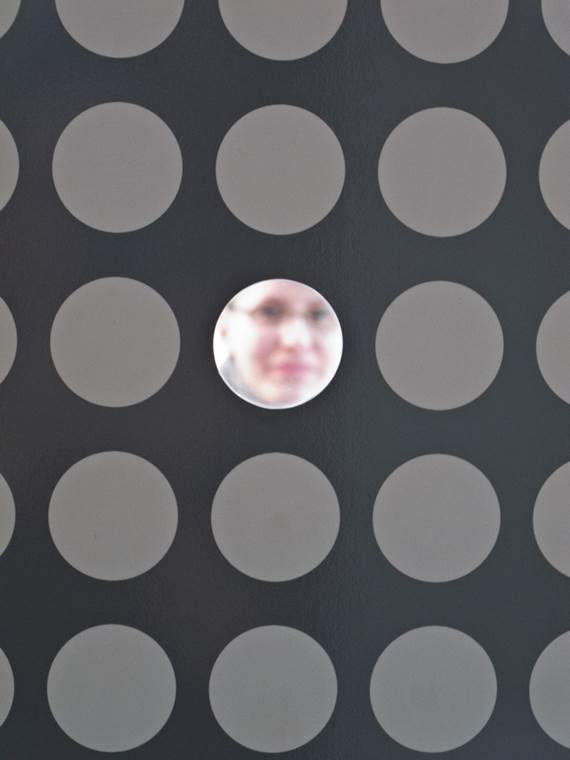 Working with self-portraits also recognises issues of self-esteem and can be used to help clients think about how they view themselves, and how others view them. This approach has been used to challenge gaps in these two perceptions in order to reduce self-esteem issues.
Examples from practice:
Superhero
 In this image the participant wanted to convey how she felt living with autism. She described how she had taken the photograph, using reflections to create the effect, and used this to explain how she felt unable to filter anything out, much like the photograph. She found it difficult to focus on one thing as noises and images constantly filled her head. Despite the challenges, she was determined to get to grip with her “superpower”.
 Therapeutic Photography